
Climate Resilience
IFRS S2: CLIMATE RESILIENCE
Carlsberg Malaysia Group’s approach in addressing climate resilience:
Own Operations: Advancing energy‑efficient technologies, expanding renewable energy use and implementing water‑saving initiatives to progressively lower the operational carbon footprint of our brewery.
Value Chain: Contributing to Malaysia’s low-carbon transition by working with our suppliers, logistics partners and customers to reduce value chain emissions, improve climate risk management and embed sustainability considerations into how our products are brewed, packaged, transported and consumed.
9.1 GOVERNANCE
Both the RMSC and SSC acknowledge that moving towards a low-carbon future is a gradual process that requires balancing different operational and strategic considerations. To guide this journey, we have outlined short- medium- and long-term transition phases within our climate strategy. We continue to channel capital investments and brewing expertise into strengthening energy security and affordability while steadily shifting towards more sustainable technologies.
This also enables a unified, end-to-end approach to reducing emissions across upstream and downstream activities, while ensuring we continuously reassess emerging climate-related risks and opportunities throughout our business.
9.2 STRATEGY
Identifying climate-related risks and opportunities enables Carlsberg Malaysia Group to strengthen resilience, anticipate regulatory and market shifts and protect long-term financial performance. In 2024, we undertook this assessment through climate scenario analysis, regulatory review and stakeholder engagement.
Using climate scenarios from the Intergovernmental Panel on Climate Change (IPCC), together with Malaysia-specific assumptions, we evaluated both physical and transition risks to our operations. The assessment focused on key resource dependencies, including water, electricity and raw materials, as well as potential cost exposure. The analysis showed that our brewery currently has low exposure to material climate related risks.
To ensure regulatory preparedness, we continuously monitor evolving climate-related regulations and policy developments. This includes assessing potential implications arising from the phased implementation of Malaysia’s carbon tax in 2026, which will initially apply to three high-emission sectors, namely steel, iron and energy. While Carlberg Malaysia Group does not operate within these sectors, we remain vigilant to possible indirect cost impacts across our value chain.
Additionally, we engage internal teams to integrate climate related risks and opportunities into business processes. This includes identifying operational vulnerabilities, strengthening supplier resilience and incorporating climate considerations into financial planning and budgeting to enhance long-term
resilience.
For more information on our climate-related risks and opportunities and climate scenario analysis, refer to Our Journey Towards Net Zero on pages 91 to 106 in Carlsberg Malaysia Group’s IAR 2024.
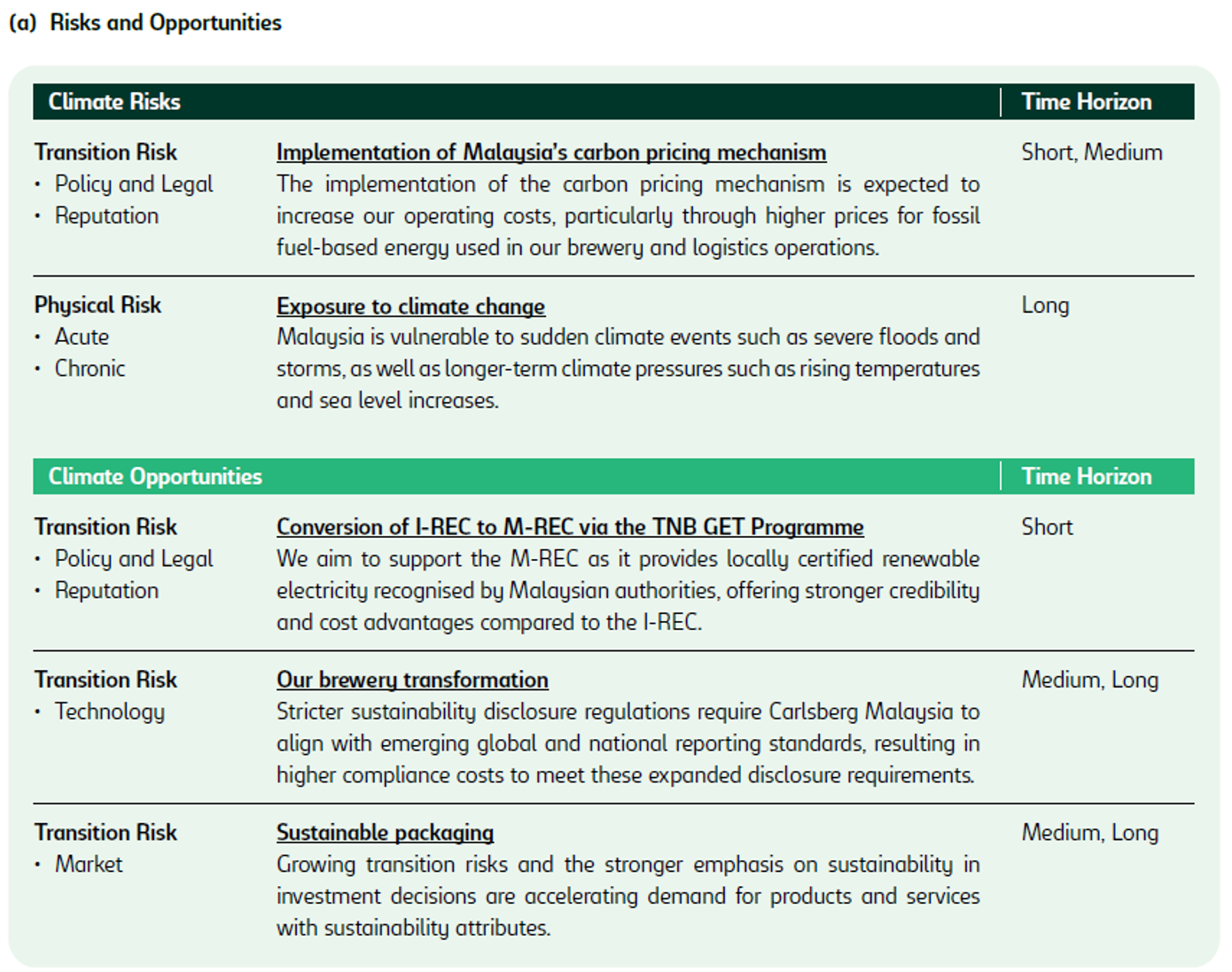
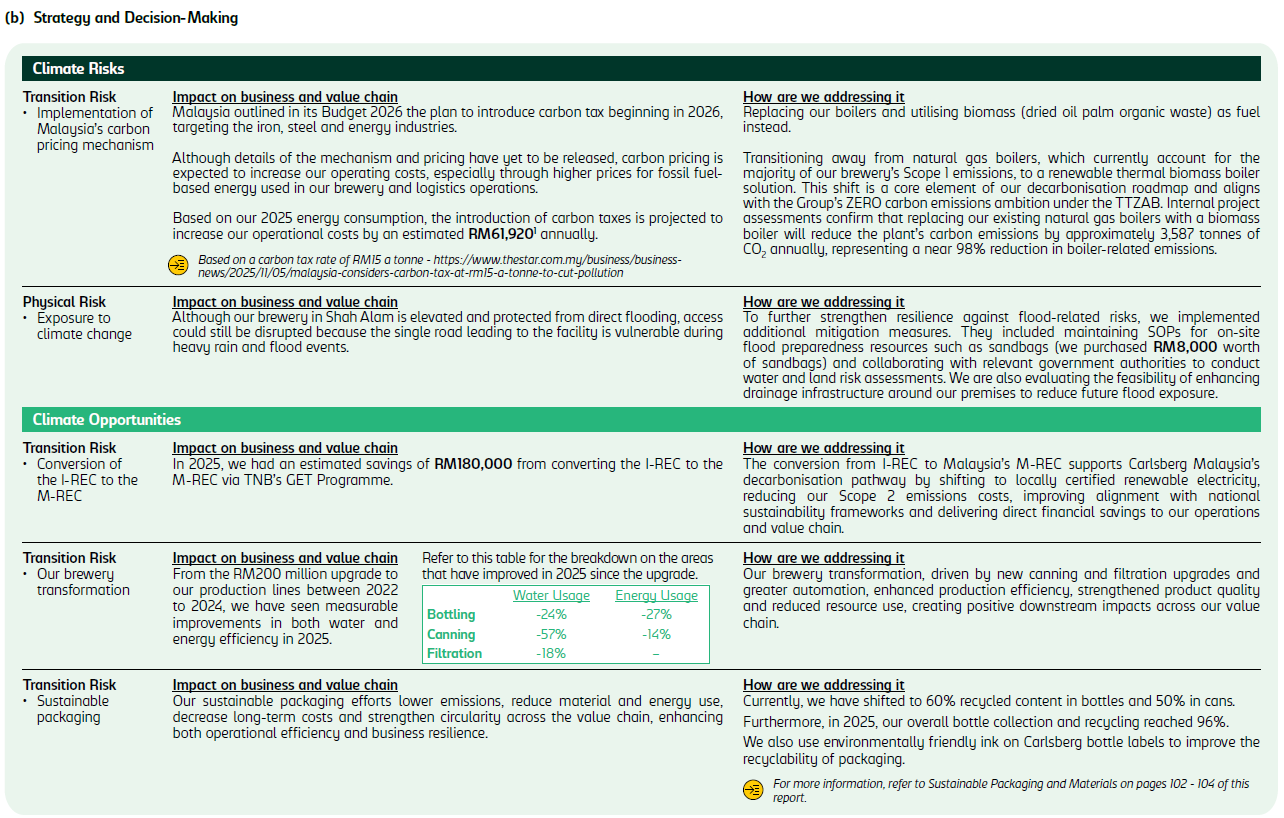
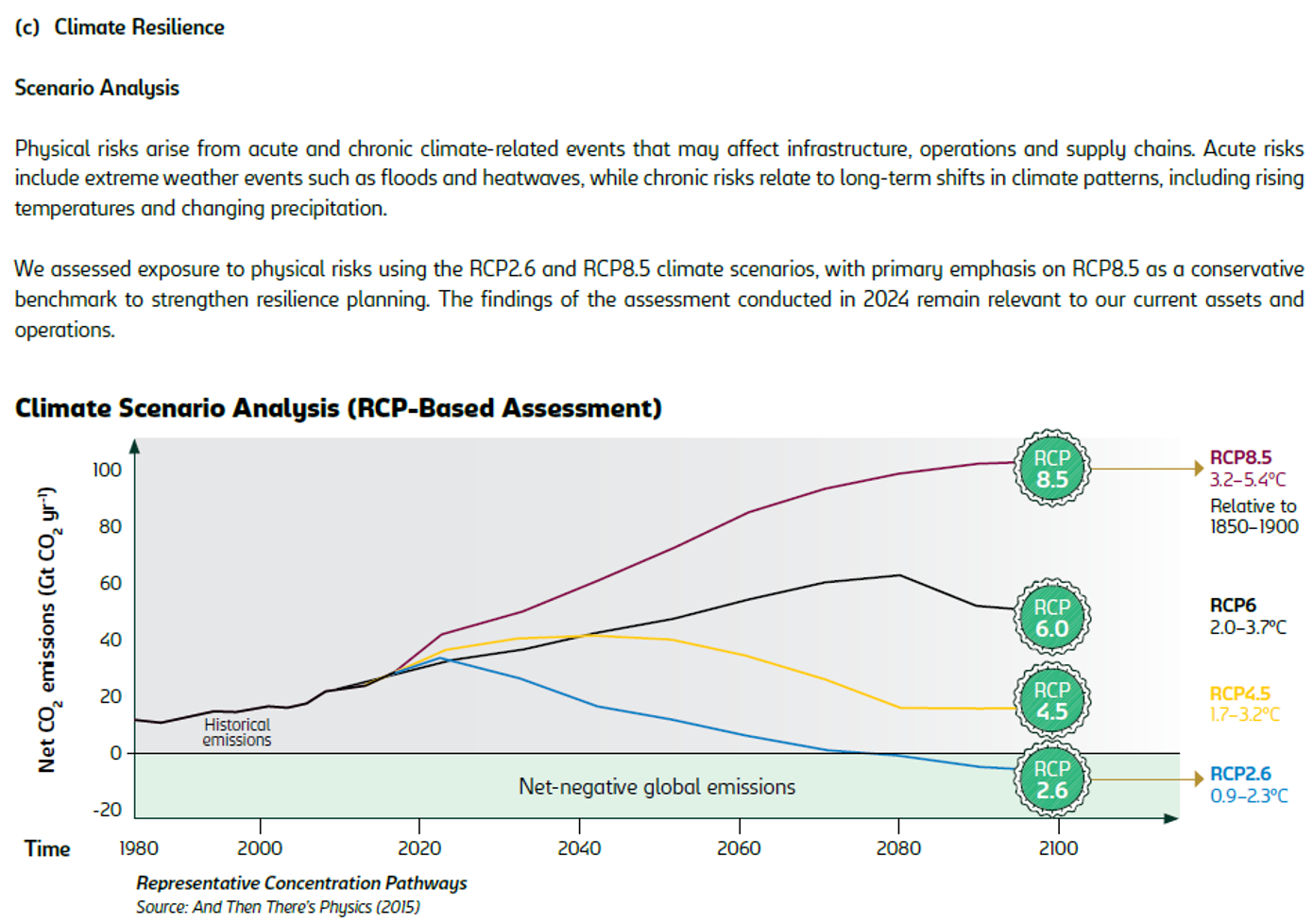
The three physical risks identified as having the most significant potential impact on our business are Sea Level Rise (SLR), increased rainfall intensity and water scarcity. Our 2024 analysis, which remains relevant in 2025 indicated that while the Shah Alam brewery is elevated and not directly exposed to flooding, it is located in an area where flooding may occur. As access to the brewing facility is reliant on a single road, our operations could be disrupted if that route becomes impassable during flood events.
Physical Risk Assessment
For the current reporting period, our physical risk assessment identified heightened rainfall intensity in 2025 as the most significant climate-related risk to our operations. While the physical risks disclosed in the IAR 2024 remain relevant, increased year-end rainfall resulted in localised flooding in parts of Klang and Shah Alam in 2025. The direct operational impact was limited, as major ammonia pipeline renovation works were already underway during that period.
To further strengthen resilience against flood related risks, we implemented additional mitigation measures. They included maintaining SOPs for on-site flood preparedness resources such as sandbags and collaborating with relevant government authorities to conduct water and land risk assessments. We are also evaluating the feasibility of enhancing drainage
infrastructure around our premises to reduce future flood exposure.
9.3 RISK MANAGEMENT
Drawing from the risks and opportunities identified across the short-, medium- and long-term horizons in this report, we established the following set of risk management controls.
- For the boiler upgrade to enable diesel fuel usage, we have established a periodic testing schedule to utilise the backup fuel system to ensure it remains operational and staff are trained on its use, given that the requirements for natural gas flow and diesel pumping are significantly different and require a different set of safety measures and safe operating procedures.
- We are also assessing the feasibility of upgrading and expanding the drainage infrastructure within and around our brewery premises to strengthen long‑term flood resilience. This review forms part of our broader physical risk‑mitigation strategy, recognising that although the Shah Alam brewery sits on elevated ground, the access roads and surrounding areas remain vulnerable during periods of heightened rainfall and localised flooding. The evaluation includes collaborative assessments with relevant government authorities, hydrological reviews and technical studies to determine the most effective engineering solutions. By proactively exploring possible enhancements, we aim to safeguard operational continuity and reinforce the resilience of our facilities against intensifying climate‑related rainfall pattern.
9.4 METRICS AND TARGETS
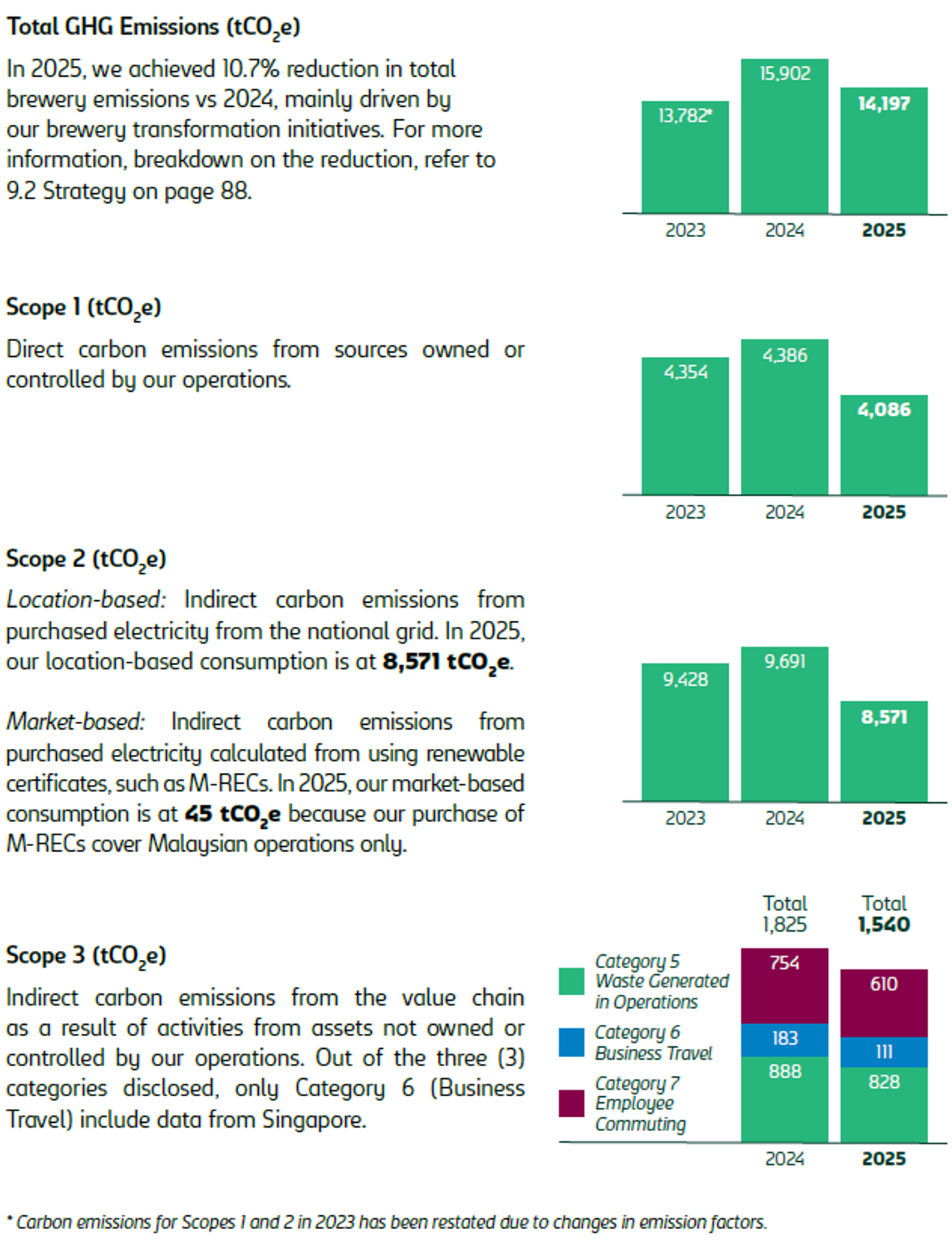
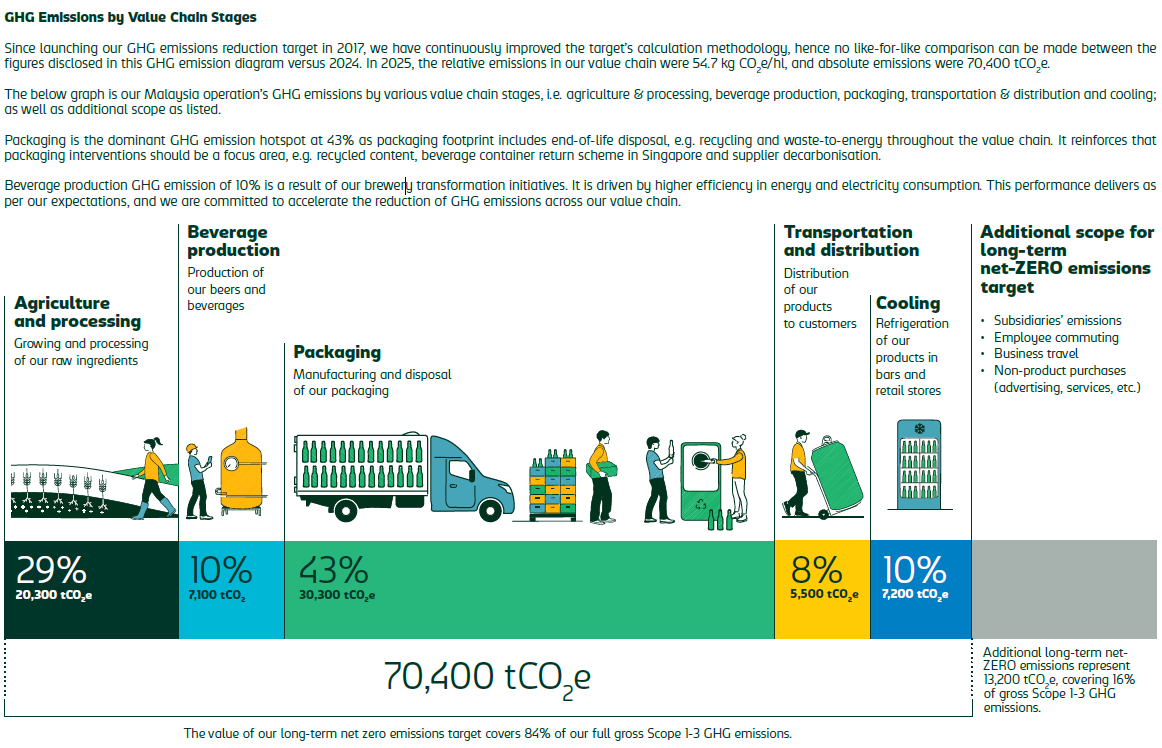
Our medium-term value chain 2030 target covers all Scopes 1 and 2 emissions, as illustrated under ‘Beverage Production’ on page 91. It is aligned with a 1.5°C pathway, using the assumptions and criteria from the SBTi. In 2025, we enhanced our disclosures with Scope 2 (tCO2e) market-based while maintaining the disclosure of three categories of Scope 3 carbon emissions, namely Category 5 (Waste Generated in Operations), Category 6 (Business Travel) and Category 7 (Employee Commuting) for both our operations in Malaysia and Singapore.
Monitoring and quantifying both direct and indirect carbon emissions enables us to manage our environmental impact and support our commitment to achieving net-zero emissions across our value chain by 2040.

Central & Eastern Europe and India
-
Azerbaijan
-
Belarus
-
Bulgaria
-
Canada
-
Croatia
-
Estonia
-
Greece
-
Hungary
-
India
-
Italy
-
Kazakhstan
-
Latvia
-
Lithuania
-
Serbia
-
Ukraine