

Sustainable Packaging and Materials
Why It Is Important
At Carlsberg, packaging used across our product portfolio in Malaysia and Singapore represents a significant element of environmental impact and our cost structure. Decisions on packaging specifications and material choices directly influence resource consumption, waste generation and carbon emissions, placing sustainable packaging and materials within the scope of environmental stewardship and business resilience.
Against this context, we applied changes across our product portfolio to increase recycled content and improve recyclability. These changes were implemented within existing market conditions and remained consistent with regulatory requirements and prevailing consumer expectations.
Our Approach
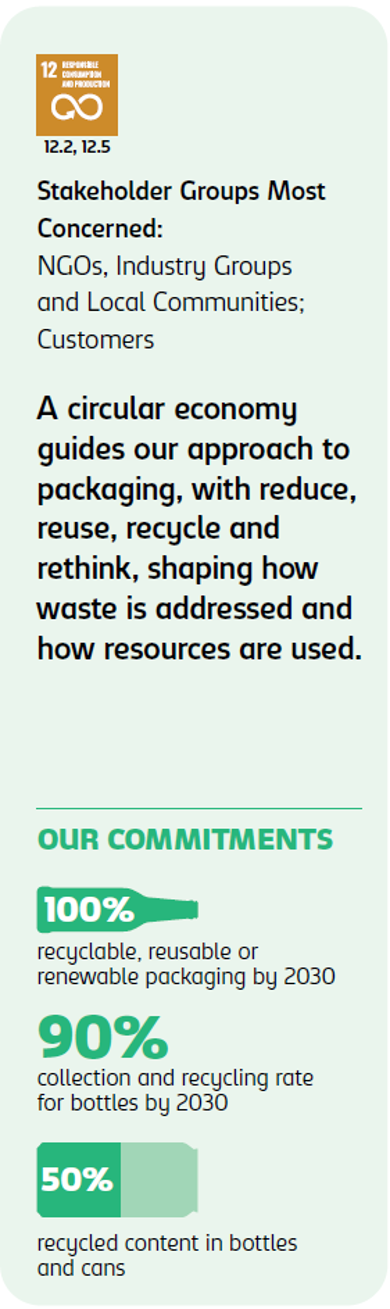
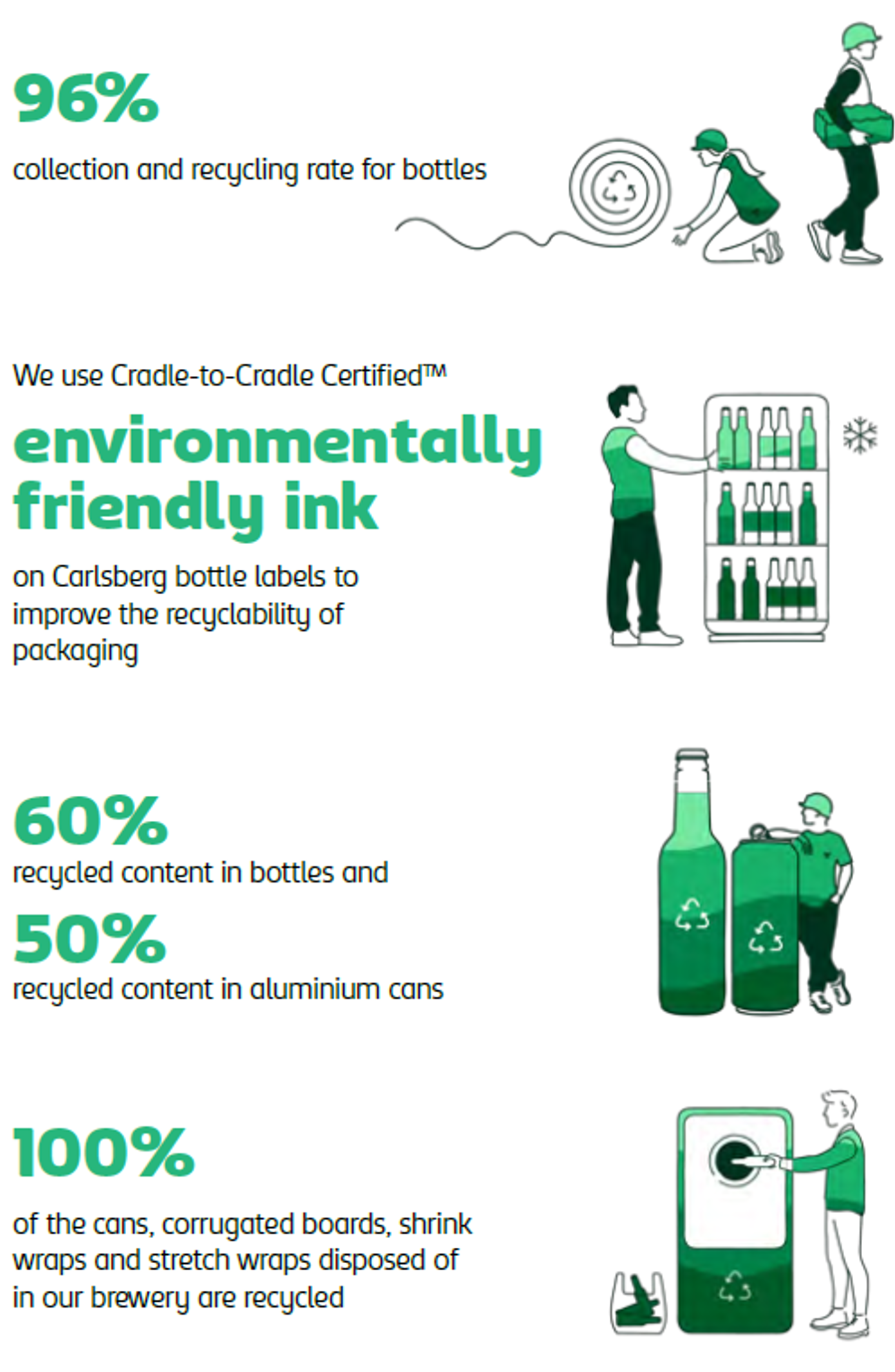
Our approach is centred around setting clear packaging outcomes across the value chain towards 2030. These outcomes define the expectation that 100% of our packaging will be recyclable, reusable or renewable, alongside a target to achieve a 90% collection and recycling rate for bottles. The approach also sets differentiated recycled content thresholds, with bottles and aluminium cans targeted to contain 50% recycled content. Together, these outcomes form part of our longer-term pathway towards achieving net zero carbon emissions across the value chain by 2040.
In Singapore, sustainable packaging considerations are shaped in part by the Beverage Container Return Scheme (BCRS), a legislated framework under the Singapore Green Plan 2030 aimed at strengthening circularity for packaging waste. The scheme applies to plastic and metal beverage containers and introduces a deposit-refund mechanism designed to increase collection and recycling rates at a national level. As a producer operating in the Singapore market, compliance with the scheme is mandatory once it comes into effect.
We also adhere to the Carlsberg Environmental Global Policy.
We applied defined recycled content specifications across our packaging portfolio, with bottles containing 60% recycled content and cans 50%. These specifications were used consistently across relevant product ranges and reflected packaging configurations in place during the reporting period.
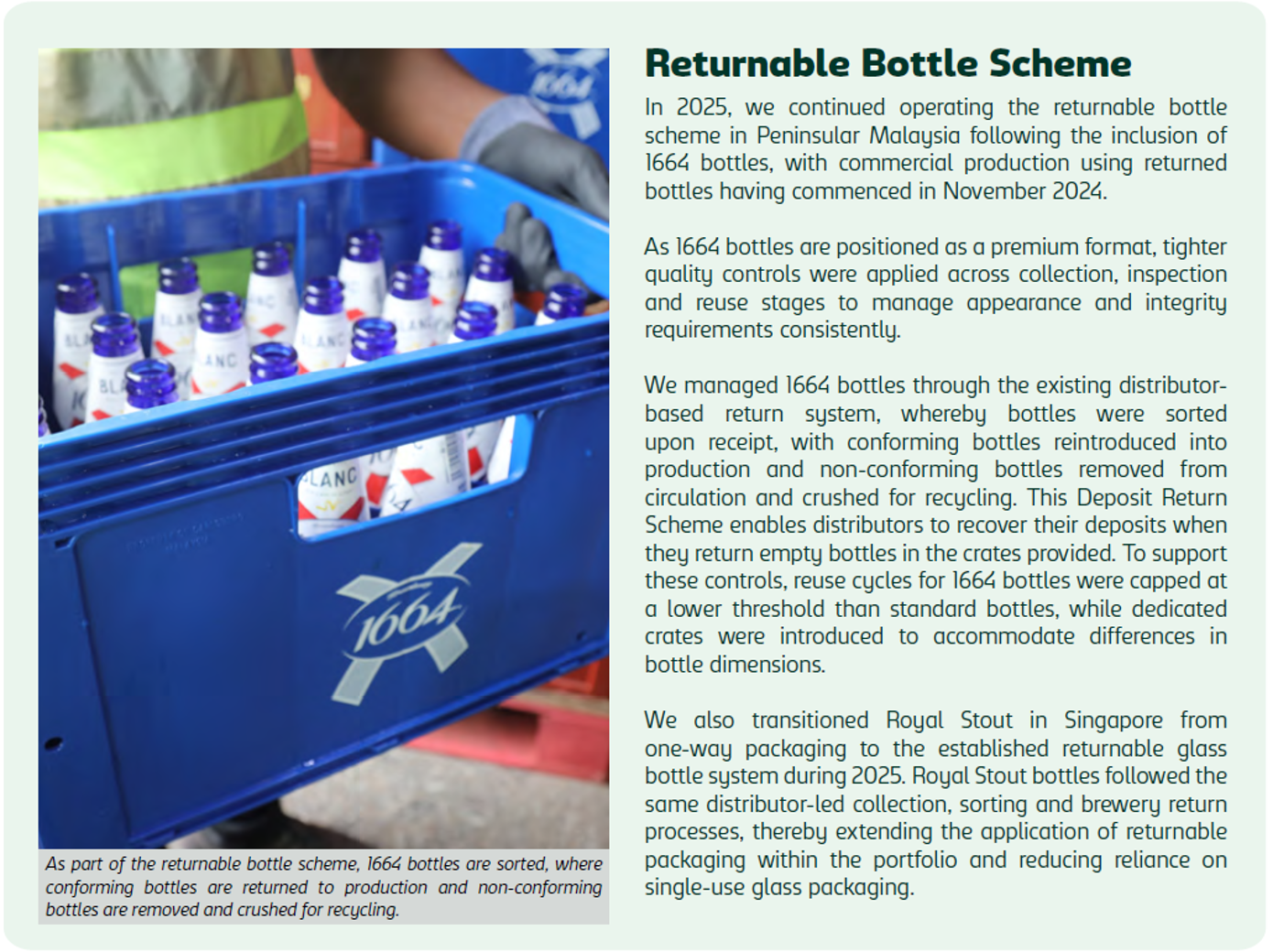
We continued to use returnable glass packaging as part of circular material use across selected products. Royal Stout in Singapore was incorporated into the existing returnable bottle system alongside Carlsberg and 1664 bottles in Malaysia, following the same distributor-level return process applied to other returnable glass products. In 2025, our overall bottle collection and recycling reached 96%.
We undertook preparatory work to support the transition to the BCRS in Singapore. This included transitioning relevant stock-keeping units (SKUs) to compliant formats, updating packaging artwork and labelling and aligning internal systems to support deposit accounting and reporting requirements. Inventory and stock transition planning was carried out to manage the shift from non-compliant to compliant packaging formats while limiting material write-offs.
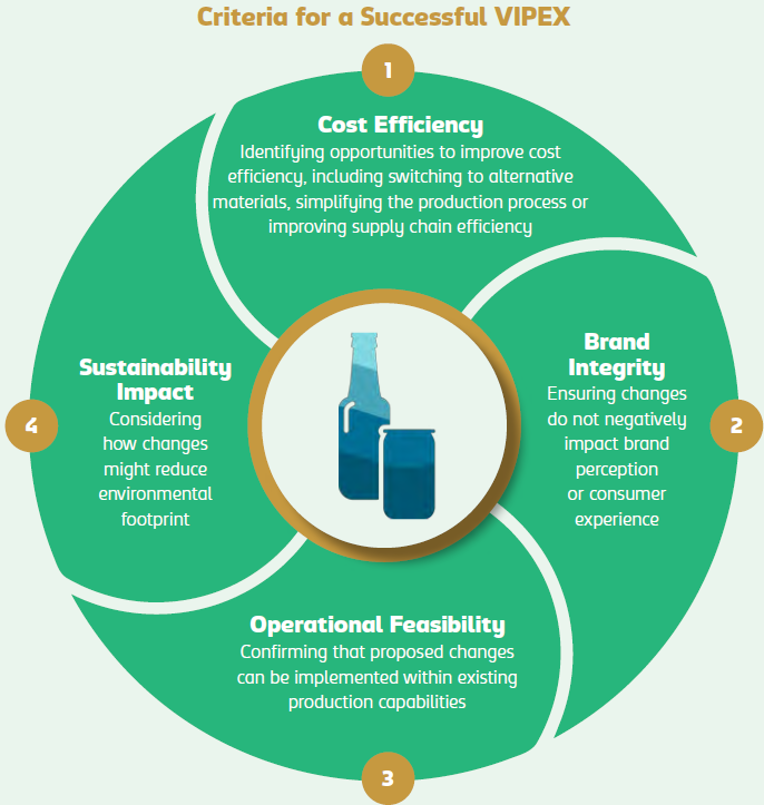
Value Improvement Process Excellence (VIPEX)
In 2025, we brought colleagues from across the business together to review our product and packaging portfolio to examine how individual design features contribute to consumer value, operational feasibility and material use.
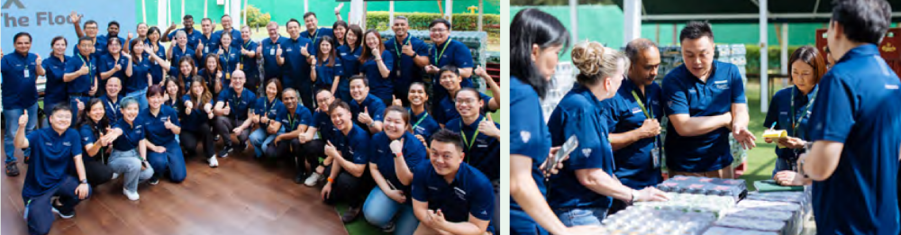
This review was conducted under Value Improvement Process Excellence (VIPEX), a Carlsberg initiative that examines packaging and brand specifications to identify opportunities to improve cost efficiency and sustainability performance without affecting brand equity, functionality or quality. As part of this work, a Walk the Floor workshop was held to enable a detailed, hands-on examination of our packaging materials.
During the workshop, participants from Supply Chain, Marketing, Commercial,
Sustainability and leadership teams, including regional colleagues, reviewed primary, secondary and tertiary packaging components alongside samples of other SKU information on product complexity. Teams rotated through the different review stations to discuss observations and challenge existing specifications from multiple operational and market perspectives. Ideas arising from these discussions were consolidated and assessed for implementation. One of the many ideas include the optimisation of selected bottle labels to reduce material usage without affecting product quality or consumer experience.
Further sustainability-linked ideas identified during these discussions are undergoing trials in 2026 to assess operational feasibility of the proposed
packaging changes.
We always bring out the best in ourselves by thinking creatively,
stepping outside the box and taking risks. That is why we have
every function represented here today: because together, we can
create better, more innovative solutions than any one team alone.
So, let us come together, push boundaries and make the most of this
opportunity.
Stefano Clini, Managing Director
Going Forward
For 2026, we will continue to practise the existing bottle return systems across our markets. For Singapore, we will be piloting pint returns for our key volume driver, Carlsberg Danish Pilsner. This is expected to go live by the second quarter of 2026. We will also be supporting the implementation of Singapore’s BCRS with preparatory work undertaken in 2025 to align packaging formats, systems and reporting processes with the regulatory requirements.

Central & Eastern Europe and India
-
Azerbaijan
-
Belarus
-
Bulgaria
-
Canada
-
Croatia
-
Estonia
-
Greece
-
Hungary
-
India
-
Italy
-
Kazakhstan
-
Latvia
-
Lithuania
-
Serbia
-
Ukraine